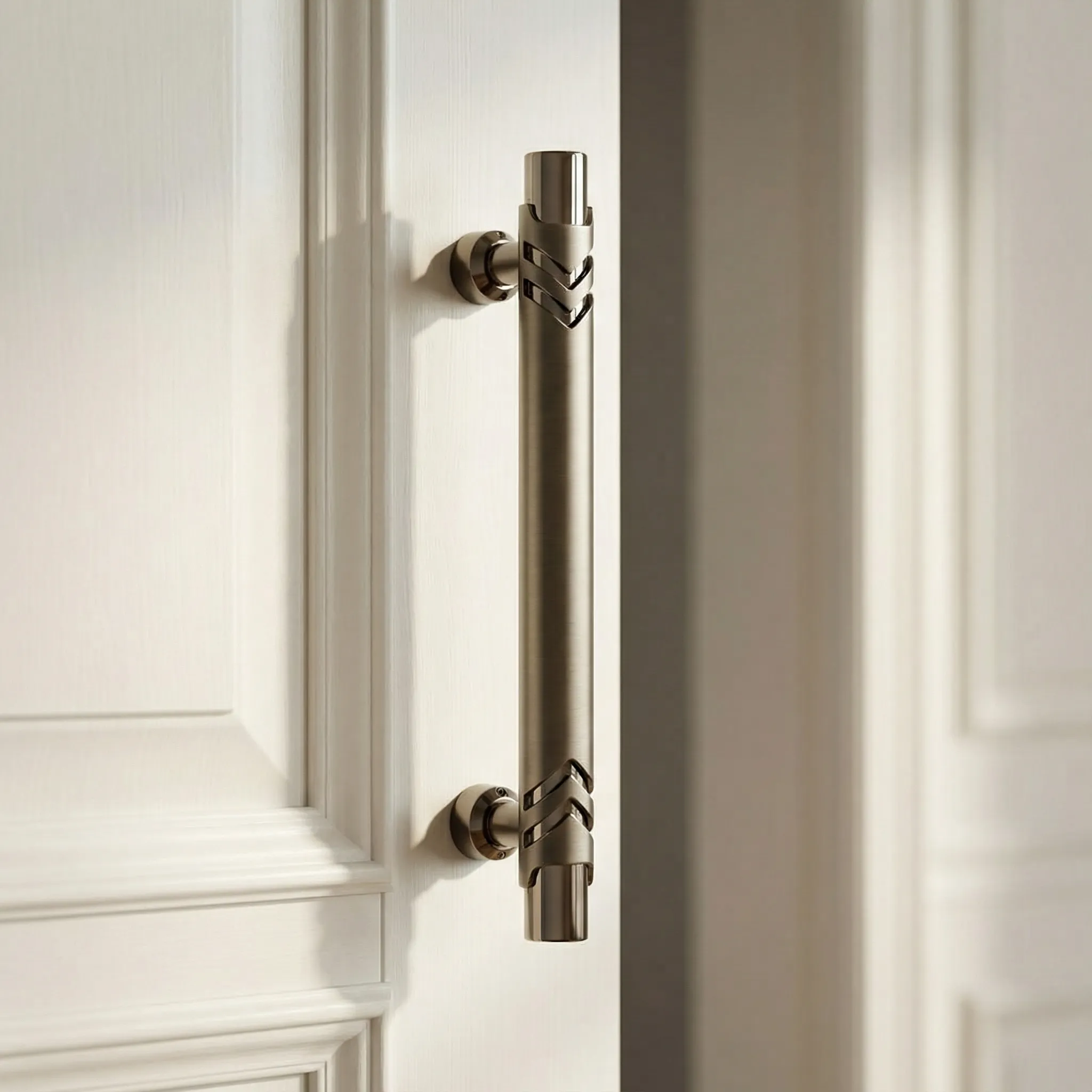

Walk into any modern Australian kitchen and you will notice the small details: slim matte black pulls, brushed Aluminum knobs. Many of these details are made in India. If you want to supply that demand, you need to know how sourcing really works.
This guide walks you through the whole process in simple language. It is written for Australian importers, furniture retailers, builders, and Indian manufacturers who want to start exporting.
Why Australian Buyers Are Looking at Handles from India
Australia has a strong home renovation and custom joinery culture. Kitchens, wardrobes, vanities and commercial fit-outs all need hardware, and buyers want good design at a fair price.
This is where Handles from India become attractive. India has a long history of metalworking, especially in brass, stainless steel, zinc alloy and aluminum. Skilled labor, local raw material and large production capacity let Indian factories offer:
- Competitive pricing, even for premium finishes
- A wide range of designs, from classic to ultra-modern
- Custom sizes, finishes and branding options
- Flexible order quantities compared with some larger Asian suppliers
The India – Australia trade relationship has also improved. The India-Australia Economic Cooperation and Trade Agreement (ECTA) has reduced or removed duties on many goods, which helps importers. Duty rates can change, so always confirm the current rate for your product code before ordering.
Understanding the Indian Hardware Industry
Before you contact anyone, know how the industry is organized. Different Indian cities specialize in different things:
- Rajkot (Gujarat): Aluminum, Zinc components and hardware, with many small and mid-sized units
- Aligarh (Uttar Pradesh): well, known for locks and architectural hardware
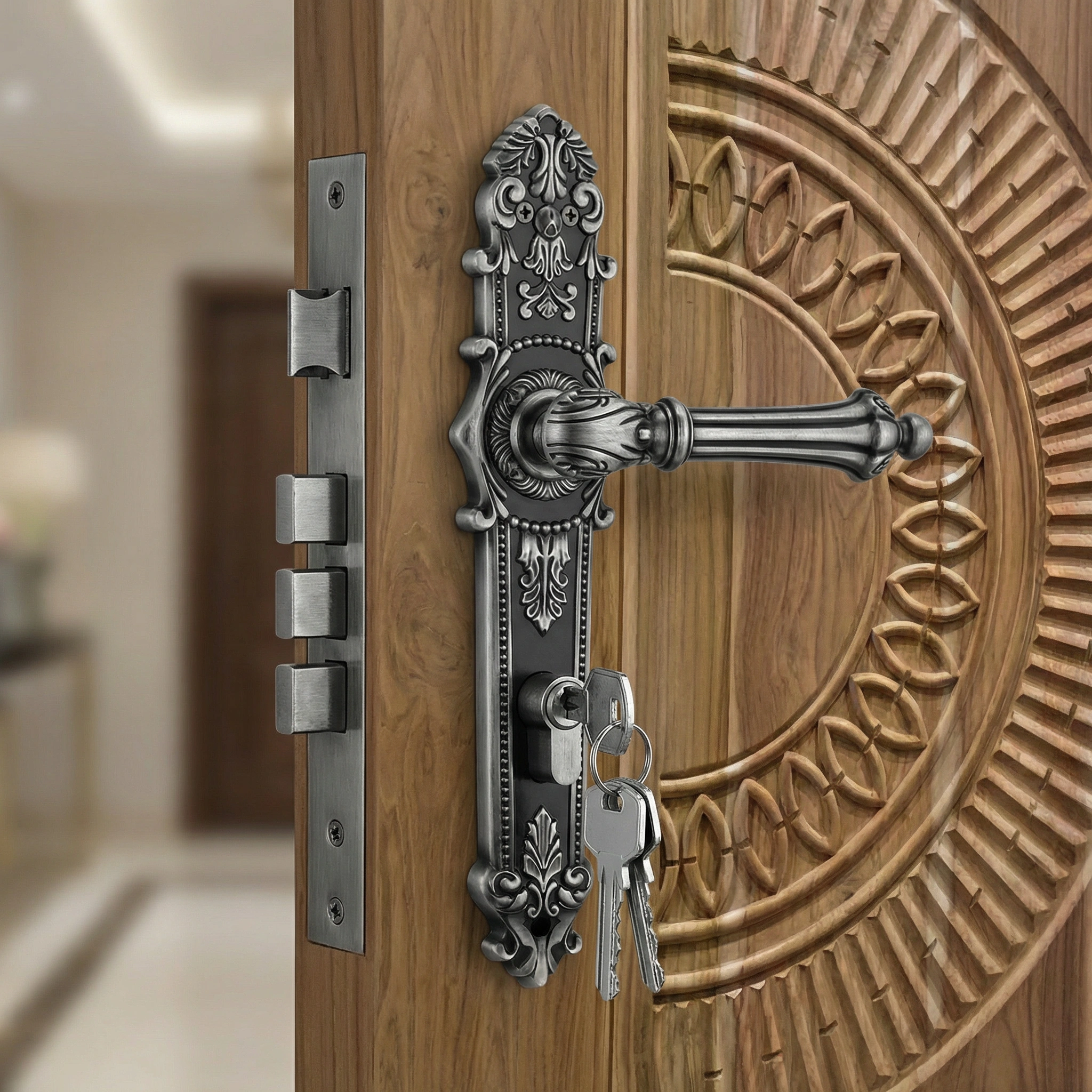
- Moradabad (Uttar Pradesh): brass and metal handicrafts, decorative handles and knobs
- Mumbai, Delhi NCR and Chennai: larger export houses and trading companies
Some suppliers are direct factories, and others are traders who buy from several units. Both can work for you, but you should know which one you are dealing with. A direct factory usually gives better pricing and control over quality. A trader or export house can offer wider variety and easier handling of paperwork.
Types of Suppliers You Will Meet
When you search for Hardware Manufacturers in India, you will usually find three kinds of businesses.
1. Manufacturers
They own the machines, molds and finishing lines. They are best for custom designs and larger volumes, but may ask for higher minimum order quantities (MOQ).
2. Merchant Exporters
They source from different factories and handle packing, documentation and shipping. This is useful if you want a mix of products in one container.
3. Specialized Door and Cabinet Hardware Suppliers
Many experienced Door Handles Exporters also supply cabinet pulls, knobs and related fittings. They already understand export documentation and international buyer expectations, which saves you time.
How to Source Cabinet Handles from India
Step 1: Define What You Need
Write down your requirements before you talk to anyone:
- Material (aluminum, brass, zinc alloy,)
- Finish (matte black, brushed nickel, antique brass, chrome, PVD gold)
- Style and dimensions, including hole center distance (96 mm, 128 mm, 160 mm are very common)
- Estimated monthly or yearly quantity
- Target price range
A clear brief gets you quicker and more accurate quotes.
Step 2: Find Reliable Suppliers
You can find suppliers through:
- Online B2B marketplaces
- Trade fairs in India and Australia
- Export promotion councils and industry associations
- Direct company websites
- Referrals from other importers
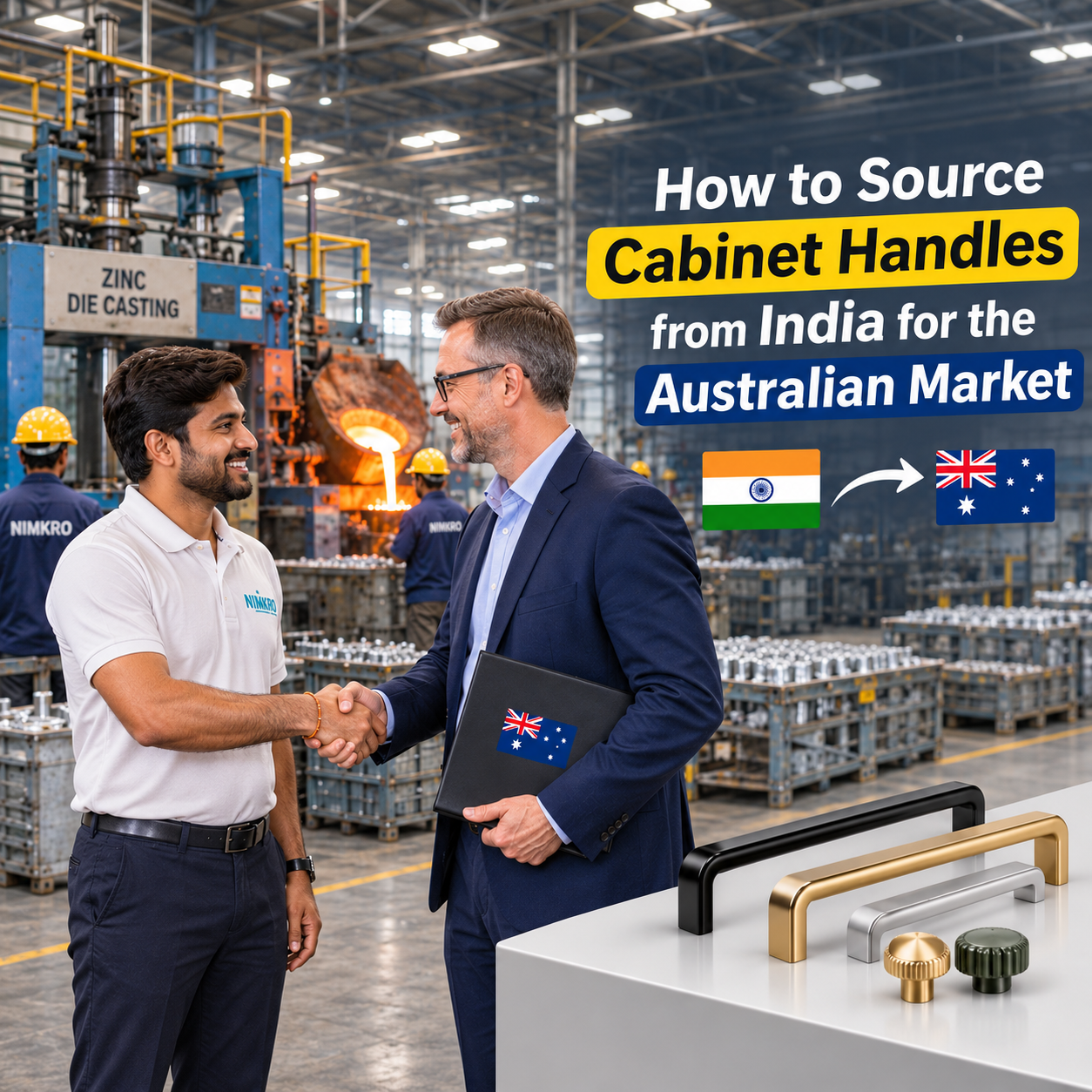
You can also work with an experienced Furniture exporter from India to Australia, who already knows the Australian market’s preferences, packing needs and shipping routes. Companies like Nimkro work in this space and can be a useful starting point for your research.
Step 3: Ask for Samples
Never place a bulk order without samples. Check:
- Weight and feel in hand
- Finish quality, with no scratches, pits or color patches
- Screw threads and mounting fit
- Packaging quality
Sample costs and courier charges are usually paid by the buyer, but many suppliers adjust them against the first bulk order.
Step 4: Check Quality and Finish Durability
Australia has coastal cities with salty, humid air. A cheap finish can tarnish or corrode quickly there. If your customers live near the coast, ask about:
- Stainless steel grade (316 is better for coastal areas than 304)
- Salt spray test reports for plated or PVD finishes
- Coating thickness and process
Good suppliers will share test reports and are not afraid of your questions.
Step 5: Negotiate Terms Clearly
Agree on these points in writing:
- Price and Incoterms: FOB (Free on Board), CIF (Cost, Insurance and Freight) or others
- MOQ per design and per finish
- Payment terms: advance payment, letter of credit, or a split such as 30% advance and 70% before shipping
- Production time: often 3 to 6 weeks, depending on customization
- Defect policy: what happens if goods arrive damaged or faulty
Paperwork You Should Know About
Smooth paperwork prevents delays at the port. Reliable Hardware Exporters from India will usually prepare:
- Commercial invoice
- Packing list
- Bill of lading or airway bill
- Certificate of origin (important for claiming tariff benefits under the trade agreement)
- Any product test reports you requested
On the Australian side, the importer is responsible for customs clearance, duty and GST (currently 10%). Many importers hire a licensed customs broker to manage this.
Packaging and Biosecurity: An Important Australian Detail
Australia has strict biosecurity rules. If your shipment comes on wooden pallets or in wooden crates, the wood generally needs to be treated and marked according to the international standard (ISPM 15). Cartons should be clean and free from soil, seeds or insects.
Ask your Indian supplier to confirm this before dispatch. A biosecurity problem can lead to extra inspection costs, treatment charges or delays, and that hurts your margins.
Shipping from India to Australia
Most cabinet handles move by sea in either:
- LCL (Less than Container Load): good for smaller orders and trial shipments
- FCL (Full Container Load): better value for regular, larger volumes
Common Indian ports include Mundra, Nhava Sheva (JNPT) and Chennai. Typical destination ports are Sydney, Melbourne, Brisbane and Fremantle. Sea transit often takes around 3 to 5 weeks, plus time for loading, customs and inland delivery. For urgent samples or small orders, air freight is quicker but costs more.
Pricing: What Affects the Cost?
When comparing quotes, remember that the unit price is only part of the story. The landed cost includes:
- Product price
- Freight and insurance
- Import duty (if applicable)
- GST
- Customs broker and port charges
- Local transport to your warehouse
Calculate all of these before deciding your selling price in Australia.
Common Mistakes New Importers Make
- Ordering in bulk without testing samples
- Ignoring finish durability for coastal customers
- Not confirming packaging and biosecurity requirements
- Choosing a supplier only because of the lowest price
- Not agreeing on a clear quality standard in writing
- Forgetting to include all landed costs in pricing
Avoiding these simple mistakes can save you thousands of dollars.
Tips for Building a Long-Term Supplier Relationship
Good sourcing is not a one-time deal. It is a relationship. To build a strong one:
- Communicate clearly and quickly, and be patient with time-zone differences (India is about 4.5 to 5.5 hours behind Australian eastern time, depending on the season)
- Start with a small trial order, then grow
- Pay on time
- Give feedback on every shipment
- Visit the factory, or arrange a video call, if you can
Suppliers prefer buyers who are honest and consistent, and they will often reward you with better pricing and priority production.
Final Thoughts
Sourcing Handles from India can be a smart move for Australian businesses that want quality, variety and good value. The process is simple once you break it down: define your needs, shortlist reliable suppliers, test samples, agree on terms, handle paperwork and biosecurity, and plan your landed cost.
Whether you work with direct factories, merchant exporters or an established Furniture exporter from India to Australia, take your time and ask questions. A little research at the start leads to smoother shipments and happier customers later. If you are exploring Indian suppliers for your next order, visit Nimkro to learn more about export-ready hardware and furniture solutions.