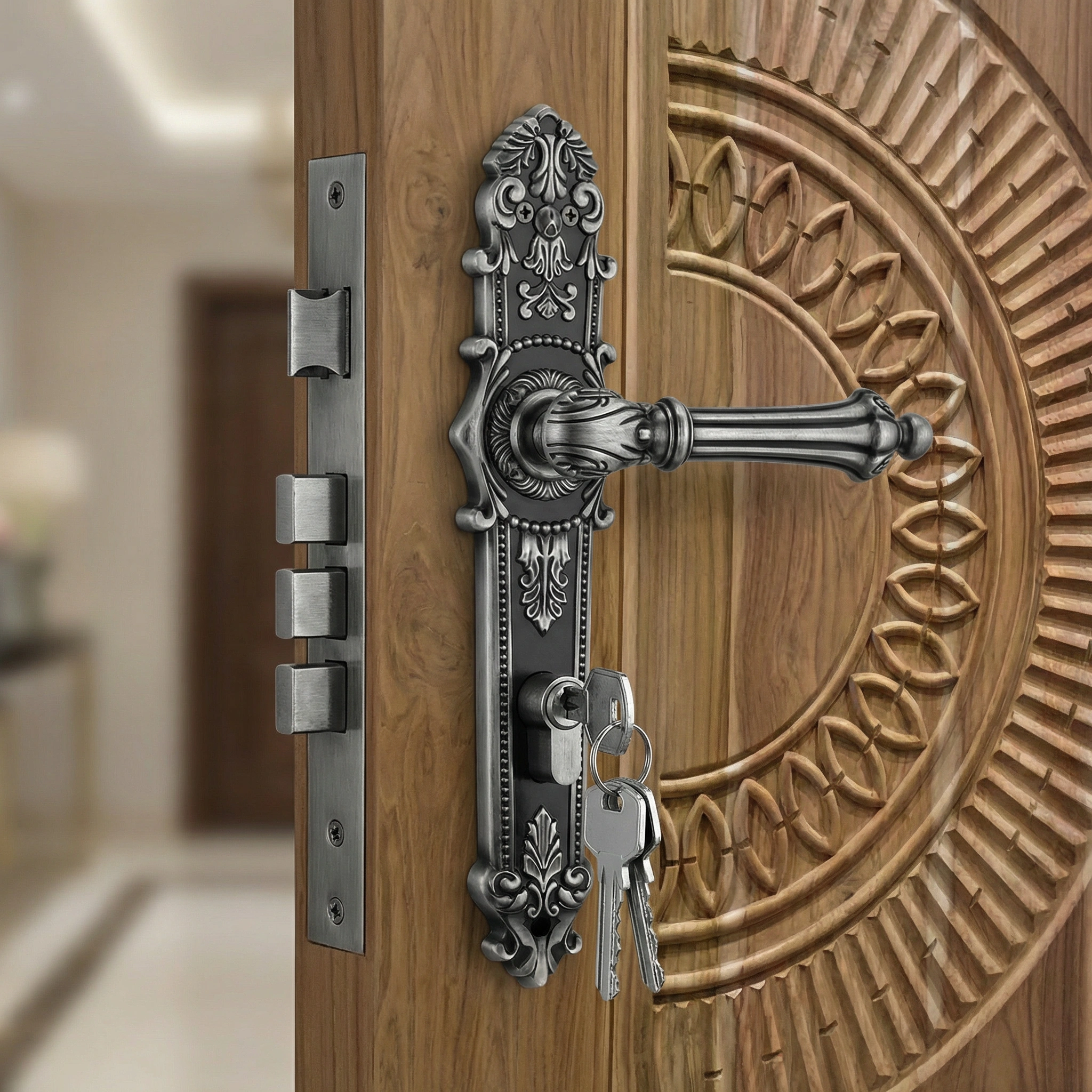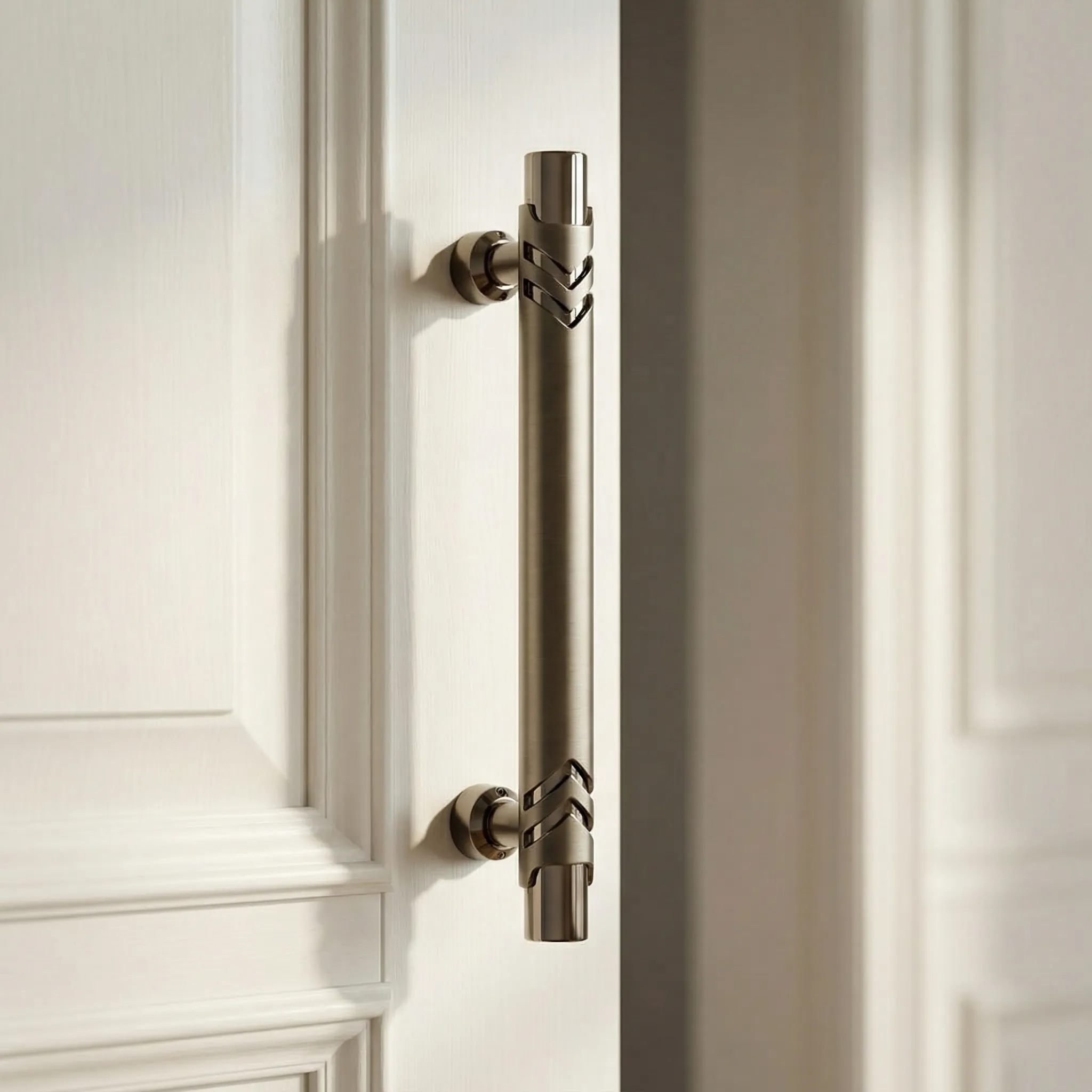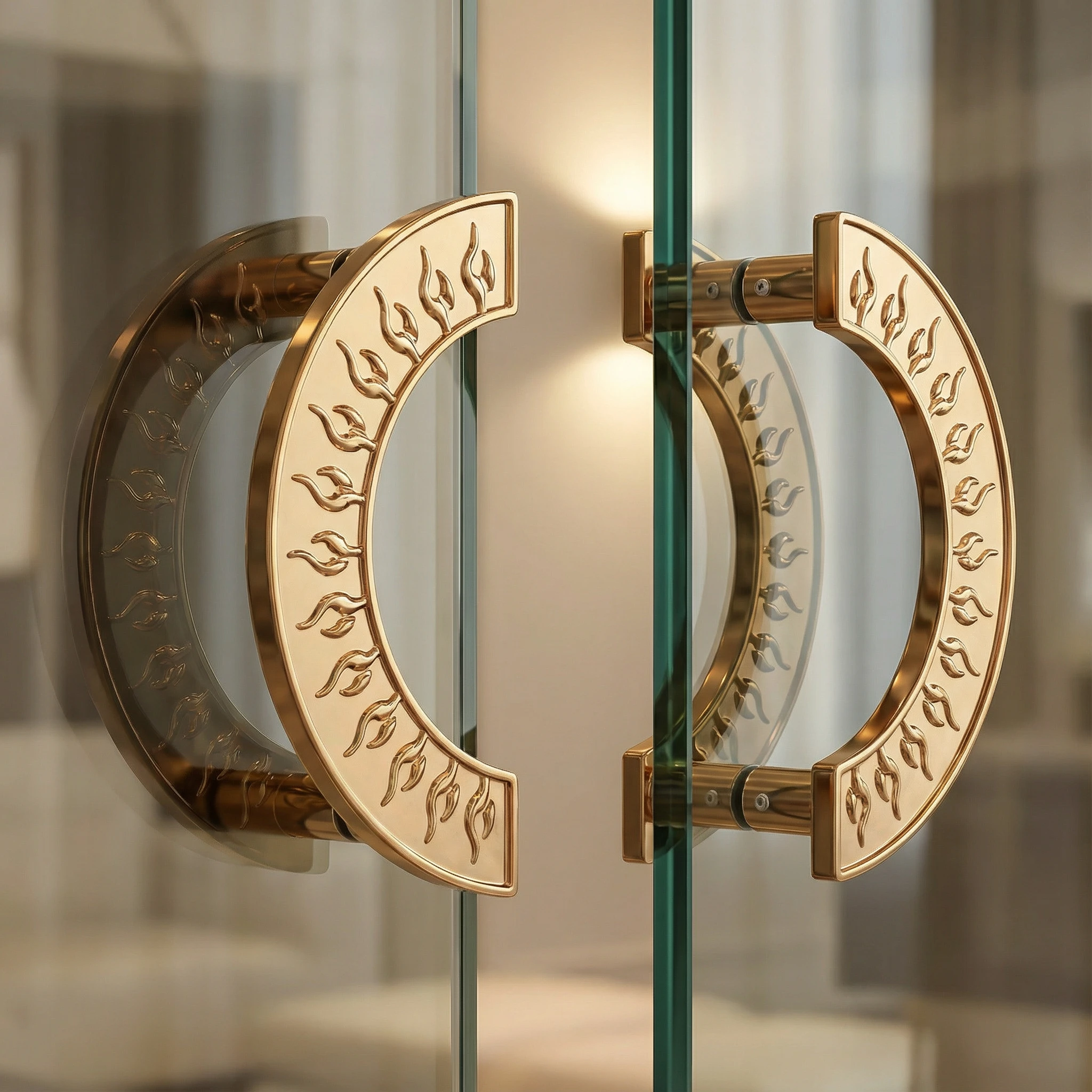

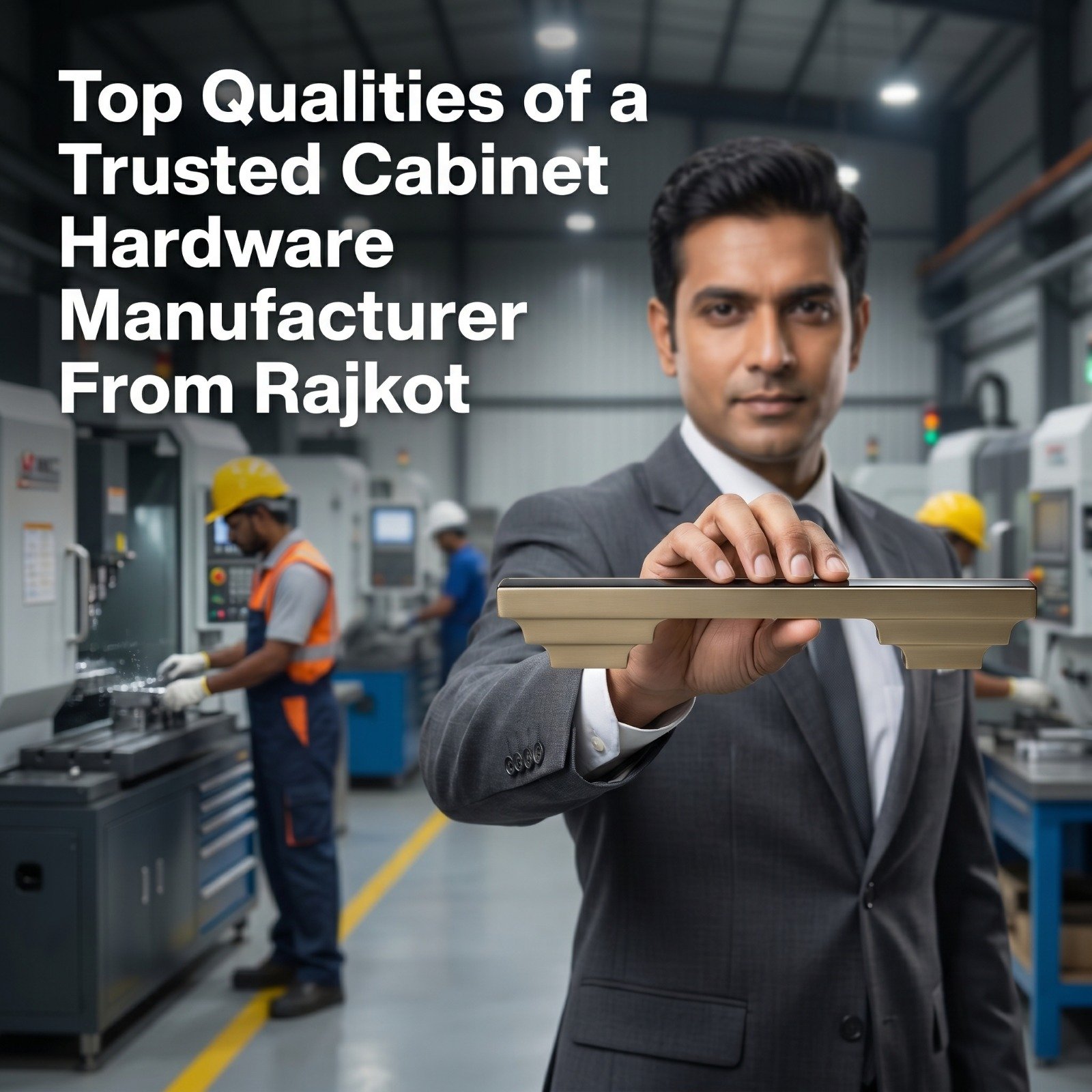
If you’re a dealer, distributor, exporter, or wholesaler in the hardware business, you already know that your reputation depends on the products you stock. One bad batch of handles, and it’s your shop’s name customers remember, not the factory that made them. That’s why choosing the right Cabinet Hardware Manufacturer isn’t just a purchasing decision, it’s a business decision that affects your repeat orders, your margins, and your relationships with clients.
Rajkot, Gujarat has quietly become one of India’s strongest hubs for architectural and cabinet hardware manufacturing. If you’re sourcing from this region, or thinking about it, here’s what actually separates a manufacturer worth partnering with from one that’ll cause you headaches down the line.
Why Rajkot Has Become a Cabinet Hardware Manufacturing Hotspot
Before getting into the qualities to look for, it helps to understand why Rajkot keeps coming up in B2B hardware conversations. The city has a long-standing culture of metal work and precision engineering, originally built around auto parts and machine tools. Over the last couple of decades, a lot of that skill and infrastructure shifted toward architectural hardware, things like cabinet handles, door handles, knobs, and fittings.
A Cabinet Hardware Factory in India based in Rajkot typically benefits from access to skilled labor, established die-casting and extrusion units, and a supply chain that’s used to working at scale. This is why so many dealers across India, and increasingly overseas buyers, prefer sourcing from this belt rather than scattered small-scale units elsewhere.
1. Consistent Manufacturing Quality, Not Just a Good Sample
Here’s a scenario every dealer has faced at some point. A supplier sends a beautiful sample piece. The finish is flawless, the weight feels right, everything checks out. You place a bulk order. Three weeks later, half the consignment has finish inconsistencies, loose screws, or slightly different dimensions.
This happens when a manufacturer doesn’t have proper quality control built into their production line, only into their sampling process. A genuinely Trusted Cabinet Hardware Manufacturer for Dealers maintains the same quality standard whether you’re ordering 500 pieces or 50,000.
Practical tip: Before finalizing a bulk order, ask for a small trial batch from actual production stock, not a curated showroom sample. Compare it against the original sample piece-by-piece. A confident manufacturer won’t hesitate to offer this.
2. Strong Material Expertise Across Aluminum, Zinc, and Brass
Cabinet hardware isn’t a one-material business. Depending on the project, design taste, and price point, your customers might want aluminum, zinc alloy, or brass. A manufacturer who only understands one material limits what you can offer your own clients.
This is where an experienced Aluminum Cabinet Handle Manufacturer has an edge, especially since aluminum has become hugely popular for modern, minimalist kitchen designs. Aluminum handles are lightweight, corrosion-resistant, and take anodized or matte finishes beautifully, which is exactly why modular kitchen brands across India have shifted heavily toward them.
That said, a well-rounded manufacturer should also be comfortable working with zinc (great for intricate, decorative designs at a lower cost) and brass (still in demand for premium, traditional, or “Raj wadi” style hardware popular in Gujarat and Rajasthan markets).
3. Genuine Architectural and Engineering Capability
There’s a difference between a trading unit that simply gets hardware made somewhere and rebrands it, and an actual Architectural Hardware Manufacturer with in-house design, tooling, and engineering capability.
Why does this matter to you as a dealer? Because in-house capability means:
The manufacturer can customize designs based on what’s trending in your regional market, instead of offering the same generic catalogue everyone else has.
Quality issues get fixed at the source quickly, rather than going through three layers of middlemen before anyone takes responsibility.
You get more stable pricing, since there’s no trading margin baked into every transaction.
For example, if a builder in your city suddenly wants a specific antique-finish knob for a boutique hotel project, a manufacturer with real engineering depth can develop a prototype in days. A pure trader usually can’t.
4. Wide Product Range That Matches Real Market Demand
Think about your own shop or warehouse. Customers don’t just ask for “a cabinet handle.” They ask for kitchen profile handles, concealed handles, glass knobs, drawer pulls, antique-style knobs, and more, often in the same week.
This is exactly why dealers consistently search for the best handles for kitchen cabinets India has to offer, because Indian kitchens have such varied requirements. A small kitchen in a Mumbai apartment needs something completely different from a sprawling modular kitchen in a Rajkot or Ahmedabad villa.
A manufacturer offering a genuinely diverse catalogue, profile handles, knobs, concealed handles, decorative plates, across multiple finishes, saves you from juggling five different suppliers just to fulfill one client’s order.
5. Transparent Pricing and Honest Communication
This one sound obvious, but it’s where a lot of supplier relationships quietly fall apart. Hidden costs, sudden price hikes mid-order, vague delivery timelines, these are the things that erode trust faster than anything else.
A Premium Cabinet Hardware Manufacturer from Rajkot that’s serious about long-term B2B relationships will give you clear, written quotations, realistic lead times, and won’t suddenly change terms after you’ve already committed stock space and marketing to their products.
Real example: Many established Rajkot manufacturers now offer downloadable e-catalogues and rate cards specifically so dealers can plan their own pricing and margins in advance, rather than waiting on WhatsApp messages for every quote. If a supplier can’t give you this basic transparency, that’s a red flag worth noting.
6. Reliable Bulk Production Capacity and Timely Delivery
For dealers, distributors, and exporters, the single biggest operational risk is a delayed shipment. A festive season order that arrives two weeks late doesn’t just cost you sales, it costs you the trust of retailers who were counting on you.
A genuine Cabinet Hardware Factory in India with proper production infrastructure, die-casting units, finishing lines, and packaging facilities under one roof, can commit to delivery dates with far more confidence than a manufacturer juggling multiple subcontractors.
Ask potential suppliers about their average turnaround time for bulk orders, and more importantly, ask what happens when there’s a delay. Manufacturers who proactively communicate delays are infinitely more valuable than ones who go silent.
7. Export Readiness and Documentation Support
If you’re an exporter or planning to expand into international markets, your manufacturer needs to understand export packaging, documentation, and compliance, not just domestic supply.
Look for manufacturers who already have experience with export consignments, proper HS code classification, and certifications relevant to international buyers. This single factor can save you weeks of back-and-forth during customs clearance.
8. After-Sales Support and Long-Term Relationship Focus
The manufacturers worth sticking with treat the sale as the beginning of the relationship, not the end of it. This includes things like replacing genuinely defective stock without a fight, providing updated catalogues as new designs launch, and being reachable when you need quick clarification for a client query.
This long-term mindset is really the foundation of what makes a Trusted Cabinet Hardware Manufacturer for Dealers, because in this business, repeat orders and referrals matter far more than any single bulk sale.
How to Evaluate a Manufacturer Before You Commit
If you’re shortlisting suppliers right now, here’s a simple practical approach:
Visit the factory if at all possible, or at minimum ask for a video walkthrough of the production floor. Photos of finished products tell you nothing about the actual manufacturing process.
Request references from other dealers or distributors who’ve worked with them for at least a year. Anyone can show you one happy customer; a real track record shows several.
Check how they handle a problem. Place a small trial order and intentionally raise a minor issue (a packaging concern, a slight delay query) to see how their team responds.
Compare their range against your actual customer demand, not just what looks impressive in a catalogue.
Final Thoughts
Sourcing cabinet hardware isn’t just about finding the lowest price per piece. It’s about finding a manufacturing partner whose quality, communication, and reliability protect your business reputation order after order. Rajkot’s manufacturing ecosystem has matured into one of India’s most capable hardware hubs, but within that ecosystem, the difference between an average supplier and a truly dependable one still comes down to the qualities covered above.
Whether you’re stocking up for the festive season, building a new export relationship, or simply looking to upgrade your current supplier, taking the time to properly vet a Cabinet Hardware Manufacturer will save you far more in returns, replacements, and reputation than it costs you in due diligence.
FAQs:
1. How do I verify if a cabinet hardware manufacturer is genuinely reliable before placing a bulk order?
Don’t just go by sample pieces or catalogue photos. Ask for a small trial batch from actual production stock, request a factory video walkthrough, and talk to other dealers who’ve worked with them for at least a year. A manufacturer confident in their quality won’t hesitate to offer any of this.
2. Which material is better for cabinet handles, aluminum, zinc, or brass?
It depends on your customer’s needs and budget. Aluminum is lightweight, corrosion-resistant, and suits modern, minimalist kitchens. Zinc works well for intricate, decorative designs at a more affordable price point. Brass remains popular for premium or traditional “Raj wadi” style hardware, especially in Gujarat and Rajasthan markets. A good manufacturer should offer expertise across all three so you’re not juggling multiple suppliers.
3. Why is Rajkot considered a good hub for sourcing cabinet hardware?
Rajkot has decades of metalworking experience, originally built around auto parts and machine tools, that has since shifted toward architectural hardware manufacturing. This means established infrastructure for die-casting, extrusion, and finishing, along with skilled labor used to working at scale, making it easier for dealers and distributors to source consistent quality in bulk.
4. What should dealers and distributors look for in terms of pricing and communication with a manufacturer?
Look for transparent, written quotations, realistic delivery timelines, and no sudden price changes after you’ve committed to an order. Manufacturers who offer downloadable e-catalogues and rate cards make it easier for you to plan your own margins in advance. If a supplier is vague about pricing or unreachable for clarifications, treat that as a warning sign.
5. Can a Rajkot-based cabinet hardware manufacturer support export orders?
Many established manufacturers in Rajkot do have export experience, including proper packaging, HS code classification, and documentation support for international buyers. If you’re an exporter, it’s worth confirming this upfront, since a manufacturer with export readiness can save you significant time during customs clearance.